
Blog
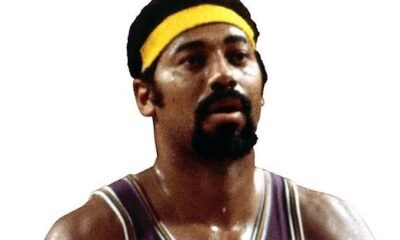
“Wilt Chamberlain’s Epic Response: ‘Don’t Compare Me to That!’ – You Won’t Believe Who He Was Talking About!”

Wilt Chamberlain’s Epic Response: ‘Don’t Compare Me to That!’ – You Won’t Believe Who He Was Talking About!
In the world of sports, legacy often weighs heavily on the shoulders of today’s athletes and the legends who came before them. Few figures loom larger in basketball history than Wilt Chamberlain, one of the most dominant players to ever step foot on a court. His physical presence, unmatched scoring ability, and relentless determination have solidified his status as a true icon. Recently, his name has been at the center of a fiery debate sparked by modern comparisons to current stars—a topic that Chamberlain himself weighed in on with a bold statement that has sent shockwaves through the sports community.
### The Background of the Comparison
In the context of basketball, comparisons between players from different eras are as old as the game itself. Fans and analysts often engage in discussions over who truly deserves the title of “greatest of all time,” with names like Michael Jordan, LeBron James, Kareem Abdul-Jabbar, and numerous others frequently mentioned. However, Chamberlain, who played in the 1960s, has often been left out of some contemporary discussions, his legacy sometimes overshadowed by the latest superstars redefining the game.
Recently, a podcast hosted by former NBA player and commentator, Jalen Rose, ignited a conversation that triggered a chain reaction across social media platforms. The podcast featured several guests debating the relevance of Chamberlain’s numbers in today’s game and whether his achievements could be paralleled to the likes of modern greats such as Giannis Antetokounmpo or Kevin Durant.
### Chamberlain’s Bold Response
In a surprise move, Wilt’s estate, in collaboration with his former teammates and family, released a video clip where they claim Chamberlain offered his take on the comparison. In the clip, Chamberlain—though known for his humility—delivered a candid and emphatic response: “Don’t compare me to that! I played in a league where competing was an entirely different ball game.”
The figurative “that” he refers to remains ambiguous, adding intrigue to the entire narrative. Was he dismissing specific current players? Or perhaps he was challenging the criteria by which today’s athletes are often evaluated against legends of the game? The internet exploded with speculation, fan theories, and fierce debates as basketball enthusiasts from all walks of life picked apart Chamberlain’s words for clues.
### Social Media Buzz and Mixed Reactions
As expected, social media exploded with memes, hot takes, and counterarguments. ESPN and other sports networks quickly picked up the story, featuring debates on their respective platforms. Analysts dissected Chamberlain’s comments, with some applauding his confidence while others criticized the arrogance implied in his words.
While several prominent analysts stood up for Chamberlain, arguing that he shouldn’t be compared to modern players due to the different style of play, there were dissenting voices. Many argued that to dismiss comparisons entirely undermines the evolution of the game and its players. Commentators like Stephen A. Smith were quick to state, “Different eras should be celebrated, not dismissed,” suggesting that Chamberlain should take pride in inspiring a new generation of players.
### Legacy Considerations
It’s essential to approach this topic with an understanding of Wilt Chamberlain’s unique place in basketball history. His dominance during his career is encapsulated by his legendary 100-point game, multiple MVP awards, and being a 13-time All-Star. Chamberlain not only redefined what it meant to dominate in the paint but also set numerous records that still stand today.
However, while Wilt’s accomplishments are impressive, today’s athletes are not simply benefitting from the legacy of their predecessors; they are also facing a host of new challenges that Chamberlain and his contemporaries did not encounter. This includes advanced analytics, greater emphasis on three-point shooting, and an increased focus on player health and nutrition.
### The Case for Modern Greats
Players like Giannis Antetokounmpo and Kevin Durant bring their own brands of excellence to the court, showcasing skills and athleticism that differ vastly from Chamberlain’s era. Giannis, for example, has mastered the combination of size, speed, and skill, leading his team to an NBA championship in 2021—a feat that would have been unimaginable for a player of Wilt’s stature in the 60s, given the era’s style of play.
Moreover, the modern game focuses heavily on versatility, with players now expected to excel in multiple roles. Chamberlain was a dominant center but did not have to adapt to playing in a league that demands a more mobile and multi-faceted approach. As the conversation evolved, many wondered if Chamberlain’s statement stemmed from an underestimation of how far the game has come and how players today have adapted their skill sets.
### Revisiting the Greatness Debate
As discussions surrounding Chamberlain’s comments continue to unfold online, they inevitably lead to a broader conversation around the “GOAT” debate. With each generation, new athletes rise and claim the spotlight, often building on the foundations established by those who came before them.
While Wilt’s achievements and records are often held in the same breath as heavenly icons like Michael Jordan and Kobe Bryant, the fierce loyalty displayed by fans often defaults to their favorite players. Currently, superstars like LeBron James and Stephen Curry are also in the mix, creating an intricate puzzle filled with admiration, jealousy, and, of course, comparisons that will likely never settle fully.
### Conclusion: Understanding the Legacy
Wilt Chamberlain remains a potent figure in basketball history, which will continue to spark discussions long into the future. His disdain for comparisons to modern players highlights what is often a contentious aspect of sports discourse—the importance of context. While players continue to redefine the game, the legacy of icons like Chamberlain lays the groundwork for understanding what greatness truly means.
Chamberlain’s statement is less an affront to modern players and more a testament to his extraordinary career and the era in which he played. As fans, it is crucial to embrace the greats of the past, while also welcoming and celebrating the stars of today. In celebrating these athletes, we honor the evolution of the game while recognizing that greatness takes on many shapes and forms.
In summary, while the basketball world reverberates with the echoes of Chamberlain’s bold pronouncement, it serves as a reminder of the complexity of greatness—a conversation that will evolve but never truly end.










-

 Blog2 years ago
Sad News: Manchester United player died when playing for his country England yesterday 😢 😔
-
 Arsenal2 years ago
As a professional player, I know I’m not supposed to talk like this but I must say it because this has become a burden on me,if we lose this season premier league then it’s Arteta’s fault, very soon we will turn to a laughing stock because of this that is doing”, Declan Rice fumes at Mikel Arteta for trying to destroy ONE Arsenal player career who is now balling everyday for the club
-

 Blog1 year ago
No.1 player in America, stands 8.5-foot-tall committs to Alabama Football team over Tennessee vols and Georgia
-
 Blog2 years ago
“I can’t work with him as my club’s captain and here is why”: Man United’s new coach Ruben Amorim has revealed why he can’t Bruno Fernandes as his club’s captain, names his successor immediately
-
 Manchester United2 years ago
He destroyed us yesterday, I’m really disappointed with His performance,He wasted all the ball I gave Him yesterday”, Bruno Fernandez reveals the only Man United player that really disappoint Him yesterday
-

 Blog2 years ago
“We would have won the game but he was all over the field… it’s unfortunate Arteta doesn’t know how to use such fantastic player”: PSG coach says his team has never face a player like £68m Arsenal player in his entire career, praises the superstar
-

 Blog1 year ago
Breaking News: Tom Izzo Head Coach of Michigan State basketball invested $3.6 Million to transform a house into a shelter for homeless youth in Michigan after serious…
-
 Blog2 years ago
Breaking News: Unai Emery Aston Villa Manager has just lost his Life this morning RIP SIR